Honest note (please read): Indonesia’s visa, tax and property rules change frequently. Everything here is general information, current as of 2025–2026, and is not legal, tax or immigration advice. Costs, income thresholds and visa names are indicative ranges that can change — always confirm the latest regulations with a licensed, Kantor-Imigrasi-registered consultant, lawyer or tax adviser before acting. We never recommend nominee property arrangements, working on a tourist visa, or visa-runs. We are a guide and concierge: for your situation we connect you to vetted, licensed professionals.
BPJS Kesehatan for foreigners is Indonesia’s mandatory national health insurance scheme, and in some cases long‑stay expats are required to join it. Before you sign up, you need to understand what it actually covers, how much it costs, and how realistic it is as your main health safety net in Indonesia.
Last checked against official and industry sources: June 2026. Rules and prices change fast — always re‑verify.
As always on Moving to Indonesia: this is general information, not personal legal, visa, tax, or insurance advice. For decisions about your own situation, speak with a licensed Indonesian lawyer, immigration consultant, or insurance professional.
—
What is BPJS Kesehatan and how does it work for expats?
BPJS Kesehatan is Indonesia’s public health insurance system. It’s run by a state agency (BPJS = Badan Penyelenggara Jaminan Sosial) and funded by contributions from employers, workers, and the government.
For Indonesians, it’s mandatory. For foreigners, it’s a bit more nuanced.
Who must join BPJS as a foreigner?
Under current regulations (still in force in 2025–2026):
– Foreign workers with a valid work permit (RPTKA/IMTA or its latest equivalent) and a long‑term stay permit (KITAS/KITAP) are generally required to be enrolled by their employer **if they work at least 6 months in Indonesia**.
– Some local authorities also expect:
– Foreign directors/commissioners listed in company documents and holding a KITAS/KITAP to be enrolled.
– Foreigners employed by Indonesian entities (PT, PT PMA, foundations, etc.) on local payroll to be enrolled.
Groups who are usually **not** required to join (but in some provinces may be encouraged or allowed to):
– Retirement KITAS holders without local employment.
– Spouse/family KITAS holders where only the Indonesian spouse works.
– Investor KITAS holders who are not on local payroll (dividends, not salary).
– Digital nomads / tourists on visas like B211, D1–D2 (digital nomad) or visa‑on‑arrival.
– Students on temporary study visas (often covered under private/student plans instead).
Local interpretation can differ by BPJS branch and Manpower Office. Some expats on investor or retirement permits report being asked to join; others are refused. Expect inconsistency and be ready with documentation.
What does BPJS Kesehatan actually cover?
BPJS is designed as **basic, universal health coverage**, not premium private insurance. In broad strokes, it covers:
– Outpatient care at a registered primary clinic (puskesmas or designated private clinic)
– Referral care at district/general hospitals
– Inpatient treatment in multi‑bed wards (class depends on your contribution level and current rules)
– Many medicines on the national formulary
– Maternity care (prenatal, delivery, some postnatal)
– Chronic disease care (diabetes, hypertension, TB, etc.)
Key limitations that impact foreigners:
– **Tiered system and referrals** – You usually must start at your registered clinic. Directly walking into a big private hospital and expecting BPJS to pay is often not possible unless it’s an emergency and the hospital is in the network.
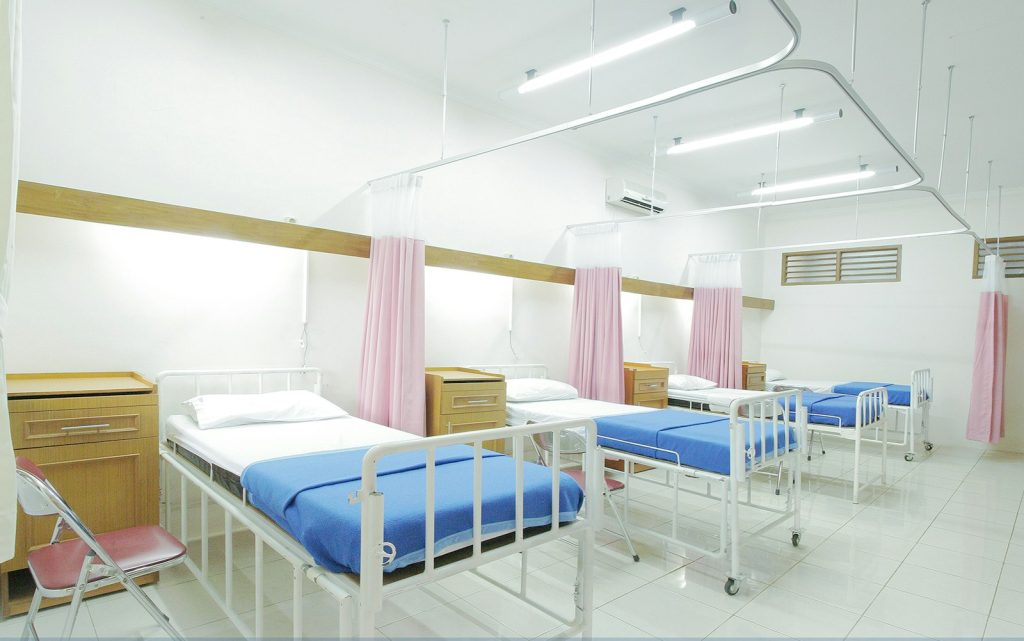
– **Ward rooms, not private suites** – In many regions, BPJS inpatients stay in shared rooms, which can be crowded.
– **Choice is constrained** – Only contracted facilities accept BPJS; many high‑end expat‑oriented hospitals either:
– Don’t work with BPJS at all, or
– Limit BPJS to certain departments and heavily ration quota.
– **Non‑covered items** – Private rooms, some newer drugs, brand‑name medications, and many elective procedures are out‑of‑pocket.
For serious, complex care, many expats still rely on **private international health insurance plus evacuation cover** to Singapore, Malaysia, or their home country.
—
Who is BPJS Kesehatan good for — and who should be cautious?
There is no universal answer. Here’s how it tends to play out in real expat life.
BPJS Kesehatan can make sense if you:
– Are a **foreign employee on local payroll** and your employer enrolls you and pays its share.
– Speak some Indonesian or have a local partner/assistant to help at clinics and hospitals.
– Live in a city with **decent public hospitals** (Jakarta, Surabaya, Bandung, some Bali/Java cities).
– Are comfortable using **shared wards and public facilities** for non‑emergency care.
– Want a **backup** for day‑to‑day illnesses while keeping a separate private/emergency policy.
In those cases, BPJS can be a **low‑cost base layer** of protection, especially for routine care and simple emergencies at local hospitals.
Be cautious depending on BPJS if you:
– Depend on fast access to **English‑speaking doctors and international hospitals**.
– Have **chronic or serious pre‑existing conditions** that may be subject to waiting periods or limitations.
– Are older and want the option to **medevac to Singapore or Kuala Lumpur** for complex surgeries.
– Are pregnant and want guaranteed access to a specific private hospital and OB‑GYN.
In those scenarios, most long‑stay expats treat BPJS — if they have it — as a **secondary backup**, not their main plan.
—
Who can register for BPJS Kesehatan as a foreigner?
Basic eligibility in 2025–2026
To be accepted into BPJS Kesehatan as a foreigner, you normally need:
– A valid **KITAS or KITAP** with at least 6 months validity.
– A clear **employment link** to an Indonesian entity (for worker category).
– Or, in some areas, foreign residents with long‑term permits may be allowed as “participant non‑wage earners” (mandiri), but implementation is patchy.
The main foreign categories BPJS recognizes:
1. **Foreign wage earners (Pekerja Penerima Upah Asing)**
– You are on the payroll of an Indonesian company.
– Your employer must register you and pay its share of contributions.
2. **Foreign non‑wage residents (Pekerja Bukan Penerima Upah / Mandiri Asing)**
– Often theoretically open to long‑term foreign residents.
– In practice, some BPJS branches register them; others say “only for Indonesians”.
3. **Dependants of foreign workers**
– Spouse and children under a certain age (usually 21–25 if in full‑time education), if the worker is already enrolled.
Tourists, short‑term business visitors, and digital nomads without KITAS/KITAP are usually **not eligible**. They should look at travel insurance or global expat policies instead.
—
How much does BPJS Kesehatan cost for foreigners?
Indonesia has changed the BPJS contribution model several times. The broad pattern as of 2025–2026:
– **Employees on local payroll** pay a percentage of their reported salary (capped).
– **Self‑enrolled participants (mandiri)** pay a **fixed monthly rate per person**, tied to a service “class”.
Exact numbers can and do move, and they also differ for government vs private employees. Treat the ranges below as orientation, not a quote.
| Participant type | Who usually falls here | Monthly cost range (last verified June 2026) | Who pays? |
|---|---|---|---|
| Foreign employee on local payroll | Expat with KITAS, Indonesian employer, salary in IDR | Often around 1–5% of reported salary up to a ceiling, split employer/employee | Employer + employee via payroll deduction |
| Mandiri (self‑enrolled) participant | Some long‑stay foreigners accepted at local branches | Typical Indonesian ranges have been roughly IDR 40,000–160,000 per person/month, class‑dependent | The participant pays directly to BPJS or via banks/apps |
| Dependants of foreign worker | Spouse and children of enrolled worker | Often an additional per‑person charge in similar ranges to mandiri | Usually the worker (or employer, depending on company policy) |
Again: your exact contribution depends on:
– Formal salary reported to BPJS.
– Employer type and policy.
– How your local BPJS office classifies you.
Always ask your HR department or local BPJS branch for a written simulation of your contribution before you commit.
If you’d like help comparing BPJS contributions with expat insurance options and daily living costs in your city, you can plan your trip with us — we can also chat by WhatsApp and point you toward licensed brokers and advisors.
—
How to register for BPJS Kesehatan as a foreigner
The process is heavily employer‑driven if you are a foreign worker, and more complicated if you try to sign up yourself.
If you are employed by an Indonesian company
Typically:
1. **Employer registration**
– Your company registers with BPJS as an employer (if not already).
2. **Employee data submission**
– HR sends your details: passport, KITAS/KITAP, NPWP (Indonesian tax ID) if available, family card details for dependants, and salary data.
3. **BPJS numbers issued**
– BPJS assigns you (and dependants) a participant number and virtual account.
4. **Card activation**
– You receive a digital or physical BPJS card.
5. **Clinic/hospital selection**
– You or HR choose your primary clinic (faskes pertama) from the BPJS network in your area.
Your contribution is usually deducted monthly from payroll, with the employer paying its mandated share.
If you are trying to self‑enroll (mandiri)
Expect more friction and different answers from different branches. The usual documents asked for:
– Passport
– KITAS/KITAP with at least 6 months validity
– Local address and sometimes a domicile letter from your RT/RW/banjar
– Indonesian phone number
– Bank details or payment method for monthly contributions
Some BPJS offices may say foreigners without local employment cannot join as mandiri. Others will process you after some back‑and‑forth. This is where having a local partner, agent, or HR manager help can save a lot of time.
—
What is Indonesia’s public healthcare like for foreigners in real life?
This is where expectations often clash with reality.
Quality and consistency
Indonesia public healthcare for foreigners is:
– **Highly variable** by region.
– Major cities (Jakarta, Surabaya, Bandung, Denpasar) have some excellent doctors and decent public hospitals.
– Smaller cities and rural areas may struggle with staffing, equipment, and medicine stocks.
– Often **crowded**.
– Public hospitals can have very long queues, even early in the morning.
– Multi‑bed wards mean noise, limited privacy, and family caregivers sleeping under beds or in corridors.
– **Language** can be a barrier.
– In Jakarta and Bali, more doctors and nurses speak some English.
– In many regions, you will depend on Indonesian or a local friend/partner to interpret.
BPJS patients are usually seen in separate queues or departments compared to full‑private patients. Waiting times can be significantly longer.
How BPJS works in practice during illness
A typical care pathway with BPJS:
1. **Mild illness** (flu, minor infections, basic chronic care)
– You go to your registered clinic or puskesmas.
– Wait in line, register, see the doctor, pick up medicines from the in‑house pharmacy.
2. **Need for specialist/hospital**
– The clinic issues a **referral** to a BPJS‑affiliated hospital.
– You attend the hospital with your referral letter and BPJS card.
– Again, be ready for queues and multiple counters.
3. **Emergency**
– In a life‑threatening emergency, hospitals are supposed to accept patients first, sort payment later.
– If the hospital is in the BPJS network and the condition qualifies, BPJS can cover a significant portion.
– If the hospital does not work with BPJS, you or your insurer pay and may have limited recourse.
Many expats in Bali, Jakarta, and major cities choose a **hybrid** approach:
– Routine/intensive language‑light situations: private clinics or hospitals, paid by cash, employer plan, or expat insurance.
– Big emergencies: aim for a private hospital but with an evacuation plan.
– BPJS: a fall‑back if private insurance has gaps or reimbursements are contested.
—
BPJS vs expat health insurance: side‑by‑side comparison
Below is a conceptual comparison, based on common 2025–2026 expat experiences. Exact details depend on your employer plan and the specific private policy you choose.
| Feature | BPJS Kesehatan | Typical expat health insurance |
|---|---|---|
| Eligibility for foreigners | Primarily long‑stay KITAS/KITAP holders, especially workers | Tourists, digital nomads, KITAS/KITAP holders, retirees, families |
| Monthly cost (individual) | Generally low, often under IDR 200,000/month for mandiri ranges (or payroll %) | Very broad range: often IDR 1.5–6 million/month for mid‑tier international cover (age/benefits dependent) |
| Hospitals used | Public and some private hospitals in BPJS network | Private local hospitals + regional hubs (Singapore, KL, home country) depending on policy |
| Language/comfort | More Indonesian‑language, shared wards, queues | More English, private rooms available, shorter waits |
| Evacuation (medevac) | Not a focus; domestic care within network | Often included or add‑on to regional/global centres |
| Pre‑existing conditions | Partially covered with rules; not always transparent to expats | Often excluded or subject to long waiting periods/loadings |
For many expats, the realistic set‑up is:
– **If legally required**: Enroll in BPJS through your employer.
– **On top of that**: Buy a **private expat policy** that:
– Covers private care within Indonesia at your preferred hospitals.
– Includes **emergency evacuation** out of Indonesia for major issues.
—
Common pitfalls foreigners face with BPJS Kesehatan
1. Assuming BPJS works like Western/Nordic national health systems
Indonesia’s system is under real strain. Funding gaps, infrastructure limits, and regional inequalities mean **you cannot assume Scandinavian or NHS‑style experiences**.
BPJS is a safety net in a developing middle‑income country, not “free luxury healthcare.”
2. Not paying contributions on time
If contributions fall behind:
– Your BPJS status can become inactive.
– Access to services may be blocked until you settle arrears (sometimes with penalties or rules about reactivation).
If you leave Indonesia, make sure your employer closes your account properly or you manage the status yourself.
3. Going to a non‑network facility and expecting BPJS to reimburse
Non‑network private hospitals will usually treat you as a full cash patient, even if you flash your BPJS card. Reimbursement from BPJS in such cases is limited and heavily regulated.
4. Underestimating the admin load
Navigating BPJS queues, referrals, and rules can be frustrating even for Indonesians. For foreigners without Indonesian language or a local helper, it can be overwhelming.
—
Should you use BPJS Kesehatan as an expat?
Ask yourself:
1. **Are you legally required to join?**
– If your Indonesian employer says “BPJS is mandatory for you,” push them (politely) for:
– Written policy references.
– A breakdown of costs.
– Clarification on dependants.
2. **How much Indonesian do you speak?**
– If you can’t communicate at all, assume you’ll need a helper for public facilities.
3. **What is your risk tolerance?**
– If you are comfortable with public hospitals for most care, BPJS might be acceptable as your base.
– If not, treat BPJS as a minimum and budget separately for expat insurance.
4. **What’s your long‑term plan?**
– Long‑term residents sometimes appreciate BPJS for chronic conditions like hypertension or diabetes, supplemented by occasional private checkups.
– Short‑term contractors might be fully covered by company expat insurance instead.
The honest answer for most foreigners is:
– **If you’re required to have BPJS, accept it as a basic safety net but don’t rely on it exclusively.**
– Still budget for either:
– A private expat policy, or
– A mix of out‑of‑pocket private care plus an emergency evac/major medical policy.
—
How BPJS fits into the bigger relocation picture
Health cover is one piece of settling in. Your real‑world choices around housing, transport, and schooling interact with it:
– If you live **far outside big cities**, consider the time to reach a hospital that actually works with BPJS and has capacity.
– If you rent in areas popular with foreigners (parts of Bali, Jakarta, Bandung, Surabaya), local private clinics may be more convenient for day‑to‑day issues than your BPJS clinic.
– If you have children in international schools, check:
– School nurse and emergency protocols.
– Which hospitals they use in emergencies.
– Whether your family plan or BPJS aligns with those hospitals.
For a holistic relocation plan — housing, schooling, healthcare, and daily‑life budgeting — you can plan your trip with our team. We’re happy to sanity‑check your assumptions by WhatsApp and connect you with licensed visa, legal, and insurance professionals. No one can pay to change what we publish; if you proceed with our partner they may pay us a referral fee at no extra cost to you.
—
FAQs: BPJS Kesehatan for Foreigners
Is BPJS Kesehatan mandatory for all foreigners?
No. It is generally mandatory for foreign workers employed in Indonesia for at least six months on a KITAS/KITAP and local payroll. Retirement visa holders, investor KITAS holders without local salaries, and tourists/digital nomads are usually not required, although some local offices may encourage or allow them to join. Always confirm the latest rules with your employer, BPJS branch, and a licensed advisor.
Can I use BPJS Kesehatan at private hospitals popular with expats?
Sometimes, but not always. Only private hospitals that have contracts with BPJS can accept it, and often only for specific services or with limited quotas. Many high-end international hospitals operate mostly on private/self-pay and international insurance. You need to ask your preferred hospital directly if they accept BPJS and under what conditions.
Does BPJS Kesehatan cover medical evacuation to Singapore or my home country?
No. BPJS is focused on care within Indonesia at designated facilities. It does not function as an international evacuation policy. If you want the option to be transferred to Singapore, Kuala Lumpur, or your home country for serious conditions, you need separate insurance that includes medevac.
Can foreigners join BPJS Kesehatan without a KITAS or KITAP?
In practice, no. BPJS enrollment for foreigners is tied to having a long-term stay permit (KITAS/KITAP), and often an employment relationship with an Indonesian entity. Tourists and people on short-term visit or digital nomad visas are expected to rely on travel or expat health insurance instead.
Is BPJS Kesehatan enough, or do I still need private health insurance in Indonesia?
For most expats, BPJS alone is not enough if they want consistent access to private hospitals, English-speaking doctors, and possible evacuation abroad. If you are required to have BPJS, treat it as a basic backup and strongly consider adding expat health insurance or at least an emergency/medevac policy on top.