Honest note (please read): Indonesia’s visa, tax and property rules change frequently. Everything here is general information, current as of 2025–2026, and is not legal, tax or immigration advice. Costs, income thresholds and visa names are indicative ranges that can change — always confirm the latest regulations with a licensed, Kantor-Imigrasi-registered consultant, lawyer or tax adviser before acting. We never recommend nominee property arrangements, working on a tourist visa, or visa-runs. We are a guide and concierge: for your situation we connect you to vetted, licensed professionals.
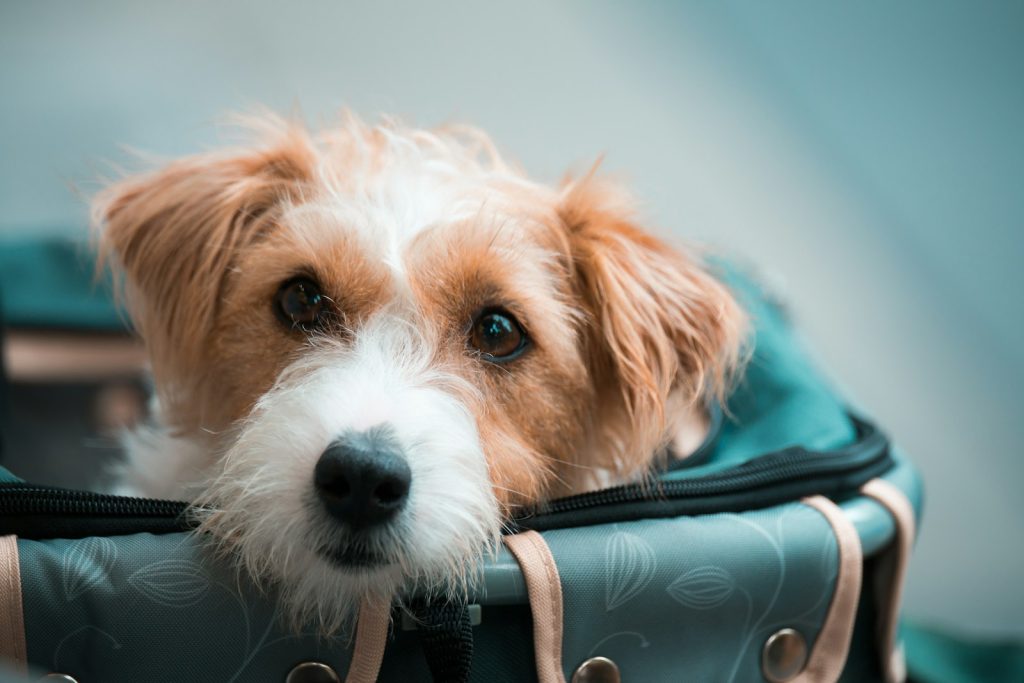
Bringing pets to Indonesia means complying with strict rabies-control rules, microchips, vaccines, blood tests and import permits – and Bali adds extra layers on top. This 2025–2026 guide walks you through how to legally bring a dog or cat to Indonesia, and the extra rules if you want to bring a dog to Bali in particular.
Last updated: June 2026 – Regulations and prices change often. Always double-check with Indonesia’s quarantine authority (Barantan) and a licensed pet relocation company before booking flights.
Disclaimer: This page is general information, not immigration, veterinary, legal or tax advice. For decisions, speak with a licensed vet, a Barantan-approved pet shipper, and (for visas/tax) a Kantor-Imigrasi-registered consultant, lawyer or tax consultant. No guarantees of approval, timing or costs.
Big picture: can you bring pets to Indonesia (and Bali)?
Indonesia allows pet import, but it is tightly regulated around rabies risk and disease control. Requirements depend on:
- Where your pet has lived in the last 6 months (rabies-free vs rabies-controlled vs high-risk countries)
- Species (dogs and cats are treated differently from birds, rabbits, reptiles etc.)
- Port of entry (Jakarta and Surabaya are usually easier than Bali for pets)
- Current local rules – Bali in particular has had periods of effective bans on dog and cat imports
For Bali, the honest answer in 2025–2026 is:
- Rules are stricter than the rest of Indonesia because Bali is trying to protect its rabies-control status.
- At times it’s been effectively impossible to legally import dogs and cats to Bali direct.
- You should plan around the assumption that rules can change quickly and that you may need to route your pet via another Indonesian city with quarantine before Bali.
If you are relocating with pets to Indonesia, start planning at least 6–8 months ahead of your move, especially if a rabies antibody (titer) test is needed.
Core requirements to bring pets into Indonesia
Requirements are set by Indonesia’s Ministry of Agriculture and enforced by the quarantine service (Barantan) at airports and seaports.
The exact steps vary by origin country, but in practice, most dog and cat imports involve:
1. ISO microchip
- Your pet must have an ISO 11784/11785 compliant microchip.
- It should be implanted before rabies vaccination, and the microchip number must appear on all vet documents and lab reports.
If your pet has a non-ISO chip, most airlines and some quarantine offices require a second ISO chip and clear documentation.
2. Rabies vaccination
- Valid rabies vaccination (usually inactivated vaccine) given by a licensed vet.
- Typically, the vaccine must be given at least 30 days before export and still be within its validity (1 or 3 years depending on the product and your country’s rules).
- Some quarantine officers look for proof of a primary course + booster, not just a single jab.
3. Rabies antibody (titer) test – often required
For many origin countries, especially those not officially rabies-free, a rabies antibody titer test is effectively required, even where not spelled out in English on older public checklists.
Typical pattern:
- Blood drawn at least 30 days after rabies vaccination.
- Test run by an approved laboratory (usually EU- or OIE-approved).
- Result showing rabies antibody level ≥ 0.5 IU/ml.
- Waiting period after the blood draw – often interpreted as 30–90 days before entry, depending on your vet and shipper’s reading of the current rules.
Because Barantan’s interpretations can change and are rarely fully documented in English, a reputable pet import Indonesia specialist will usually insist on a titer test even if your origin is low-risk.
4. Core vaccines and parasite treatments
Not always written explicitly in the import regulation, but regularly checked in practice:
- Dogs: DHLPP (distemper, hepatitis, leptospirosis, parvovirus, parainfluenza)
- Cats: FVRCP (feline viral rhinotracheitis, calicivirus, panleukopenia)
- Internal and external parasite treatments (worms, ticks/fleas) within a set window before travel (often 7–14 days).
These are usually listed on the health certificate and/or vaccination booklet that you submit.
5. Official health certificate from your home country
You will need a veterinary health certificate endorsed by your government vet authority – not just a private clinic note.
Examples:
- US: USDA-endorsed health certificate.
- EU: Official EU pet health certificate for third-country export, stamped by the competent authority.
- Australia/NZ/UK/others: Government vet endorsement as per their export rules.
Forms change regularly, and some have Indonesia-specific versions. Your pet shipper will usually provide the exact template required when they apply for the import permit.
6. Indonesian import permit (RPP / recommendation and SIP)
Before your pet departs, a licensed Indonesian pet importer usually has to apply for:
- An import recommendation from the Directorate General of Livestock and Animal Health Services.
- An import permit (often referred to as SIP) from the Ministry of Agriculture / quarantine authority for a specific entry port and date window.
Without this permit, your pet can be denied boarding or refused entry on arrival. Processing time is often 2–4 weeks if documents are in order, longer around holidays.
7. Approved port of entry and quarantine inspection
Not every airport in Indonesia can process live animals. In practice, most pet imports go through:
- Jakarta (Soekarno-Hatta, CGK) – main hub, most experienced quarantine officers.
- Surabaya (Juanda, SUB) – another common entry point.
- Other ports are possible but need specific approval and can be riskier.
On arrival:
- Quarantine officers check microchip, vaccines, titer, health certificate, import permit.
- They may collect fees and may require onsite observation or quarantine depending on your permit and origin country.
Extra Bali rules: can you bring a dog to Bali legally?
Bali has a separate, stricter policy because of its rabies-control program. The province has, at different times, had:
- Formal bans on dog and cat imports.
- Periods of “allowed in theory” but practically blocked at the airport.
- Occasional limited approvals via specific channels with quarantine and re-export conditions.
As of June 2026:
- Import rules for Bali are highly changeable and enforcement can be strict.
- Many reputable pet relocation companies will not commit to direct import into Bali with dogs or cats, or will only do so under very strict conditions and with written confirmation from quarantine.
Common practical paths people use:
- Route via Jakarta or Surabaya with quarantine, then domestic to Bali.
Your pet arrives at a non-Bali port, clears import, completes any quarantine or observation period, then later flies domestically to Bali with paperwork showing legal entry and internal movement. This may still face extra checks at Bali’s airport and is not guaranteed. - Delay pets and reassess rules later.
Some families move first, then bring pets later once the regulatory picture is clearer, rather than betting everything on a specific import window.
Key message: never attempt to smuggle your dog or cat into Bali. If you are caught:
- Your pet can be confiscated and euthanised.
- You can face fines, deportation and blacklisting.
- Smuggling undermines the exact rabies-control efforts that make Bali livable for residents and tourists.
Always get written confirmation (not just a phone call) from a licensed pet shipper who has spoken directly with Bali quarantine for the specific month you plan to travel.
Step-by-step: relocating with pets to Indonesia (2025–2026)
Use this as a planning framework; your actual checklist may differ by origin and species.
6–8 months before travel
- Confirm your own visa path (e.g. KITAS, Second Home, Golden Visa, retirement). Pet import does not depend on your visa type, but your timing does.
– For high-net-worth or investment-based stays, you can read more at goldenvisaindonesia.com and secondhomevisaindonesia.com. - Find a reputable, locally licensed pet relocation company in Indonesia and one in your home country. Ask specifically:
- Have they handled dog/cat imports in the last 12 months?
- How many via your intended port (CGK, SUB, DPS)?
- What’s their view on Bali for your target window?
- Microchip your pet (ISO-compliant) if not already done.
- Make sure rabies and core vaccines are up to date; if in doubt, start a new course now.
4–6 months before travel
- Have your vet give a rabies booster and schedule the rabies antibody titer test at least 30 days later.
- Send the blood sample to an approved lab (your shipper or vet will advise).
- Wait for the lab result; if it’s below 0.5 IU/ml, you’ll need revaccination and a new test.
2–4 months before travel
- Once you have a successful titer result, share it with your Indonesian shipper.
- They apply for the import recommendation and permit for a specific port and travel window.
- You coordinate with your home-country shipper on:
- Airline options that carry pets into your selected Indonesian airport.
- Crate training and IATA-approved travel crate sizing.
- Any temperature restrictions on pet transport.
10–14 days before travel
- Your pet has parasite treatments (internal/external) as required.
- Your vet does a full health exam and completes the official export health certificate.
- You or your shipper submit the health certificate for endorsement by your government vet authority (USDA, etc.).
Travel day and arrival
- Your pet travels usually as manifested cargo (not cabin), with clear labelling and copies of documents attached to the crate.
- On arrival, Bali or other Indonesian quarantine officers inspect your pet and paperwork.
- Depending on your permit and origin, your pet may:
- Be released after several hours of inspection, or
- Be taken to a quarantine facility for several days to weeks.
- You pay quarantine and handling fees via the designated counter; some must be paid by bank transfer instead of cash.
Quarantine and waiting periods in Indonesia
Indonesia does not publish a single, permanent quarantine length for all pets. It depends on:
- Origin country rabies status.
- Vaccination and titer test timing.
- Current biosecurity policy (which can tighten quickly after any rabies incident).
In practice (as experienced through expat relocations):
- Well-prepared pets (valid vaccinations + good titer + complete paperwork) from low-risk countries may be released the same day after inspection or held briefly (1–3 days) for observation.
- Higher-risk origins or incomplete paperwork can face longer quarantine or even refused entry.
For Bali, quarantine can be stricter and may be effectively unavailable to new imports during some policy periods, meaning the import is not allowed at all.
A good pet shipper will get a written indication from quarantine about what they expect to impose for your pet, but this is never a guarantee – officers at the port have final discretionary authority.
Costs: pet import Indonesia & bringing a dog to Bali (2025–2026)
Costs vary by:
- Origin country and airline.
- Pet size and weight.
- Port of entry and quarantine duration.
- How much you outsource to professional pet shippers vs do yourself.
The following are indicative ranges last verified June 2026, based on expat relocations and market observation – not fixed quotes. Always get current written estimates from licensed companies.
- Microchip
- USD 30–80 in most countries.
- Vaccinations (rabies + core)
- USD 50–200 per pet depending on country and clinic.
- Rabies titer test
- USD 100–300 including lab fees and vet appointment.
- IATA-approved travel crate
- USD 80–400 depending on size and brand.
- Government-endorsed health certificate
- USD 50–250 (consult + endorsement fees).
- International air freight for pets to Indonesia
- Broadly USD 500–2,000+ per pet, rising with weight and route complexity.
- Indonesian pet relocation agent fee (destination)
- Roughly USD 400–1,200 per pet depending on service level and port.
- Home-country pet relocation agent fee
- Similar ballpark, USD 400–1,500 per pet.
- Quarantine fees in Indonesia
- Roughly USD 10–40 per day plus admin, if quarantine is imposed.
- Domestic flight to Bali after clearance
- Often USD 80–300 per pet depending on airline and crate size.
For a medium dog from Europe, North America or Australia with full professional handling door-to-door, total costs of USD 2,000–5,000+ are common in 2025–2026. Cats typically cost less, giant breeds more.
If someone offers to “get your dog into Bali” for a suspiciously low price and with “no paperwork hassle,” assume high risk. Ask:
- Are they registered with Indonesian quarantine as a live-animal importer?
- Can they show recent, anonymised examples of import permits and quarantine release documents?
- Are they promising to bypass quarantine or health rules? If yes, walk away.
Choosing a pet relocation company – and red flags
Because Bali and Indonesia’s rules are complex, using a professional is strongly recommended. You want:
- A local Indonesian partner that is:
- Registered with the quarantine authority for live animals.
- Willing to put their company name and business address on the permit.
- A home-country shipper with:
- Experience on your route.
- Good knowledge of airline-specific pet policies.
Red flags include:
- “We can bring dog to Bali, no titer test needed, no quarantine, cheap and fast.”
- They refuse to share sample documents, or all communication is via informal channels with no company letterhead.
- They suggest booking your pet as “excess baggage” on a tourist ticket and “sorting the paperwork on arrival.”
If you want help filtering options and being introduced to licensed professionals (vets, visa consultants, relocation agents), you can plan your trip with us. We use WhatsApp and email for practical planning and introductions; no one can pay to change what we publish, and if you proceed with our partner they may pay us a referral fee at no extra cost to you.
Legal and tax side, briefly: pets, visas, and your move
Bringing pets does not directly affect your visa or tax status, but your overall move does, and it all needs to line up.
- Visas: Confirm a legal stay path (e.g. work KITAS, investor KITAS, retirement, Second Home, Golden Visa, family KITAS) before you commit to pet import dates. For Bali-focused visas you can cross-check current options at balivisaapplication.com.
- No work on tourist visas: Working remotely “on holiday” in Indonesia is a grey area that can turn black quickly; do not run a business or take local employment on a tourist visa or serial visa-runs. There is active enforcement and foreigners are deported and blacklisted.
- Tax residency: Indonesia looks at the 183-day rule in any 12-month period, not where your employer is or what passport you hold. Once you cross that threshold and/or establish a home here, you may trigger Indonesian tax obligations. Pets do not change this; your days in-country do.
- Property and pets: Avoid nominee property arrangements to “buy a villa that accepts dogs.” Nominee structures are legally void-able and risky. Work with lawyers to use legal ownership routes (e.g. Hak Pakai, PT PMA) instead if you need a pet-friendly home.
For concrete visa or tax decisions, do not rely on blogs (including this one). Speak with a licensed immigration consultant, lawyer, or tax professional before acting.
Practical daily-life tips with pets in Indonesia and Bali
Once your pet arrives, life here looks different from Europe, North America or Australia.
Heat, humidity, and exercise
- Plan walks early morning and late evening; midday heat can be dangerous, especially for brachycephalic breeds (pugs, bulldogs, etc.).
- Always have water and shade. Many warungs and banjar spaces are relaxed about dogs passing through, but be respectful and read the room.
Banjar and community norms
The banjar (local community organization) is a big part of daily life, especially in Bali:
- Dogs roaming off-leash are common in some areas; in others, they’re seen as a nuisance.
- Loud or aggressive dogs can cause friction with neighbours and even formal complaints to the banjar.
- When you move in, introduce yourself to neighbours and ask directly how they feel about dogs or cats in shared spaces.
Street dogs and disease risk
- Street and temple dogs are part of the landscape; encounters are unavoidable.
- Keep your dog on a leash and avoid letting them mix closely with strays – fights and bites can happen quickly.
- Heartworm, tick-borne disease and parvo exist here. Maintain regular preventatives and vet check-ups.
Vet care and pet services
In Jakarta, Bali and other big cities, you will find:
- Modern vet clinics (some 24/7) with imaging, surgery and dental care.
- Pet shops and online delivery of food and medicines.
- Groomers and boarding kennels at a range of standards.
Prices vary, but:
- Routine consults are often cheaper than in Western Europe or North America, while imported meds and diet foods can be similar or more expensive.
- Emergency care for serious issues is available but may not match big-city Western standards, especially outside Jakarta and Bali.
Finding pet-friendly housing
Not all apartments or villas accept pets, and some complexes have strict bans on dogs of any size.
- Make “pet-friendly” an explicit search filter with your agent from day one.
- Get pet permission in writing in your lease, not just a verbal “boleh” (“ok”).
- Expect to pay a slightly higher deposit in some cases for pets.
If you need help layering visas, housing and pet logistics into a realistic timeline, you can plan your trip with us; we coordinate over WhatsApp or email and connect you with vetted, licensed professionals for the specialist work.
Table summary: bringing pets to Indonesia vs bringing a dog to Bali
| Aspect | Indonesia (general) | Bali (specific) |
|---|---|---|
| Allowed in principle? | Yes, with import permit and health rules. | Highly restricted; sometimes effectively prohibited for dogs and cats. |
| Main authority | Ministry of Agriculture / Barantan. | Same, plus Bali provincial policies and local quarantine. |
| Typical entry ports | Jakarta (CGK), Surabaya (SUB). | Direct DPS import may be denied or limited; many route via CGK/SUB then domestic. |
| Rabies vaccination | Required. | Required, often scrutinised more strictly. |
| Rabies titer test | Frequently required based on origin and practice. | Generally expected; Bali unlikely to accept marginal cases. |
| Quarantine | Case-by-case; can be same-day release to several days/weeks. | Can be stricter or effectively unavailable for new imports depending on policy. |
| Risk of sudden policy change | Moderate. | High – historic bans and sudden tightening. |
| Smuggling consequences | Fines, deportation, pet confiscation. | Same, with strong enforcement focus due to rabies-control program. |
Key takeaways for 2025–2026
- Start planning 6–8 months ahead for bringing pets to Indonesia.
- Expect microchip + vaccines + titer test + health certificate + import permit as the baseline.
- Pet import Indonesia is realistic; direct dog and cat import to Bali is highly regulated and sometimes effectively impossible. Confirm current Bali rules just before you commit.
- Use a licensed pet relocation company at both ends; don’t be tempted by shortcuts or smuggling offers.
- Align pet timing with your visa, housing and tax planning, and always verify legal/tax questions with qualified professionals.
If you’d like a sanity check on your overall move – pets, housing, schools, healthcare, visas – you can plan your trip via WhatsApp or email. We’ll help you map realistic timelines and connect you with vetted, licensed specialists; no one can pay to change what we publish, and if you work with our partners they may pay us a referral fee at no extra cost to you.
FAQs: bringing pets to Indonesia and Bali
Can I bring my dog to Bali?
You may be able to, but rules are strict and changeable, and at times Bali has effectively banned new dog and cat imports. As of June 2026 you should not assume your dog can enter Bali directly, even if they meet Indonesia-wide rules. Work with a licensed pet shipper who will confirm Bali quarantine’s stance in writing close to your travel date, and be prepared to route via another Indonesian city with quarantine first.
What are the requirements to bring pets to Indonesia?
Most dogs and cats need an ISO microchip, current rabies vaccination, a rabies antibody titer test with ≥0.5 IU/ml, core vaccines, parasite treatments, an official government-endorsed health certificate, and an Indonesian import permit specifying the entry port and dates. On arrival, quarantine officers inspect your pet and may impose quarantine based on origin and documents. Exact rules vary by country and change regularly, so always check with a licensed pet relocation company and your government vet authority.
Is there quarantine for pets in Indonesia?
There can be, but the length is not fixed. Well-prepared pets from lower-risk countries with good paperwork are sometimes released after the arrival inspection or held for a short observation. Higher-risk origins, incomplete paperwork, or policy changes can lead to longer quarantine or refusal of entry. For Bali, quarantine can be stricter or import can be blocked entirely during some periods.
How much does it cost to relocate a pet to Indonesia?
Costs vary widely by size, route and service level, but as of June 2026 many expats pay roughly USD 2,000–5,000+ for a medium dog with professional shippers at both ends, including vet work, titer test, crates, air freight, and Indonesian handling. DIY and local-only options can be cheaper, while large breeds and complex routes can cost more. Always get a detailed quote from licensed companies for your exact situation.
Should I use a pet relocation company or do it myself?
You are not legally required to use a relocation company, but for Indonesia – and especially if you hope to enter via Bali – using licensed professionals strongly reduces the risk of last-minute refusals or quarantine surprises. They handle permits, coordinate with quarantine, and know how current rules are interpreted in practice. If you are very cost-sensitive and experienced with international pet travel, you can handle parts yourself, but you should still coordinate closely with a Barantan-registered import agent on the Indonesian side.