Honest note (please read): Indonesia’s visa, tax and property rules change frequently. Everything here is general information, current as of 2025–2026, and is not legal, tax or immigration advice. Costs, income thresholds and visa names are indicative ranges that can change — always confirm the latest regulations with a licensed, Kantor-Imigrasi-registered consultant, lawyer or tax adviser before acting. We never recommend nominee property arrangements, working on a tourist visa, or visa-runs. We are a guide and concierge: for your situation we connect you to vetted, licensed professionals.
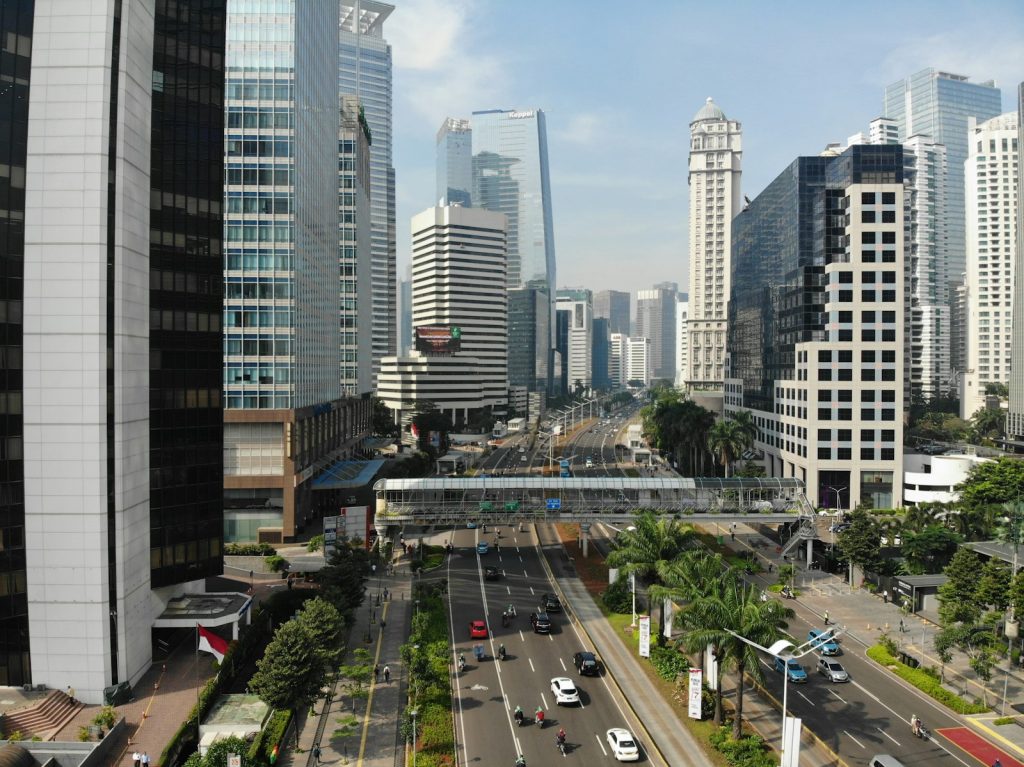
Moving to Jakarta means relocating to Indonesia’s largest, most chaotic and most opportunity‑rich city of roughly 11 million residents. For expats, moving to Jakarta is less about beaches and more about traffic, careers, schools, and learning how daily life works in a mega‑city that runs on relationships, WhatsApp, and the local banjar‑style RT/RW community system.
Updated: June 2026
Author: Reza Maulana, Editor – Housing, Healthcare & Daily Life, Moving to Indonesia
> This guide is general information only, not legal, immigration, or tax advice. Rules and costs change often. Always confirm with a licensed Indonesian immigration consultant, lawyer, or tax professional before you act.
—
## What “Moving to Jakarta” Actually Means
**Jakarta today** is no longer Indonesia’s future capital (that’s moving gradually to Nusantara in Kalimantan), but it **remains the commercial, financial, and diplomatic hub** of the country. For most foreign professionals, families and digital workers, Jakarta is still where jobs, international schools and major hospitals are concentrated.
A realistic **Jakarta relocation** usually means:
– Renting an apartment or house (ownership for foreigners is tightly restricted and often misunderstood).
– Holding the *right long‑stay visa* (work/second home/family/retirement/digital worker on a visitor visa).
– Signing up for **health insurance** and knowing which hospitals to use.
– Learning to live with traffic, flooding risk and air pollution – and how locals reduce the pain.
– Integrating with your **RT/RW** (neighbourhood community) so admin and daily life run smoothly.
—
## Visas for Living in Jakarta as an Expat
Any plan for living in Jakarta as an expat starts with the right visa. Overstays, “visa runs”, informal work, or using the wrong visa type can get you fined, blacklisted, or deported.
**Last verified: June 2026. Always confirm current rules with a licensed consultant or Kantor Imigrasi.**
### Main Long‑Stay Visa Paths
Below is a simplified snapshot of visas commonly used by people relocating to Jakarta:
| Visa type (summary) | Typical user | Core requirement (high‑level) | Stay pattern |
|---|---|---|---|
| Work KITAS (employment) | Employees of Indonesian entities | Indonesian company sponsor, approved position, work permit process | 1 year, renewable; leads to longer stay options |
| Investor KITAS | Shareholders / directors in PMA company | Qualifying share ownership in foreign investment company | 1–2 years, renewable; no separate work permit for directors |
| Second Home Visa | Wealthy long‑term residents without local job | Proof of significant funds or property use right | 5–10 years, with financial thresholds |
| Retirement KITAS | Over‑55 non‑working retirees | Accommodation, insurance, minimum income, local agent sponsor | 1 year, renewable; no legal work |
| Family KITAS (spouse/child) | Married to Indonesian or dependent of KITAS holder | Marriage/birth certificate, sponsoring spouse or parent | 1 year, renewable, no formal work rights by default |
| Multiple‑entry Visitor (business / digital nomad style) | Remote workers, regular business travellers | Proof of funds, onward travel, sponsor in some cases | Typically 60–180 day stays per entry; no local employment |
### Typical Cost Ranges (Visa Services)
Exact prices vary by visa type and service provider. Based on 2025–2026 ranges in Jakarta:
– **Professional visa agent package (KITAS or similar):** roughly **IDR 8–25 million** per person for a basic 1‑year process, depending on visa type and complexity.
– **Government fees:** usually a significant portion of that total; pay these via official channels, not in cash to an individual.
– **Extensions/renewals:** typically slightly cheaper than first applications with the same agent.
> Use licensed, reputable consultants. Ask clearly what is government fee vs. service fee, and get all receipts. We can match you to screened visa pros – you can plan your trip with us over email or WhatsApp before you commit.
—
## Where Expats Actually Live in Jakarta
Jakarta is a patchwork of neighbourhoods (kecamatan/kelurahan) with very different feels. Most new arrivals cluster where commutes, schools and lifestyle line up.
### Popular Expat Areas
#### 1. South Jakarta (Jakarta Selatan)
The main expat belt:
– **Kemang:** Older expat favourite. Bars, cafés, villas, some apartments. Walkability is limited but social life is strong. Flooding risk on some streets.
– **Pondok Indah:** Leafier, upscale suburb feel. Gated housing, big malls, golf, international hospitals, several schools within 30–45 min.
– **Cilandak / Cipete / Antasari strip:** Mix of landed houses and low‑ to mid‑rise apartments. Popular with families and mid‑level professionals.
– **TB Simatupang corridor:** Many corporate offices and some serviced apartments; convenient if your job is here.
Pros: Closer to many international schools, lots of cafés and gyms, more residential.
Cons: Long commute to CBD in peak hours; traffic on Kemang, Antasari, and Fatmawati can be intense.
#### 2. Central & South‑Central (CBD & around)
– **Sudirman / Kuningan / Mega Kuningan / Gatot Subroto:** High‑rise apartment towers, office buildings, embassies, premium malls.
– Good choice if you want to walk to work (or at least to the MRT station) and minimize daily traffic.
Pros: Access to MRT/LRT, malls, major hospitals, many offices.
Cons: Higher rent for smaller space, more “concrete”. Families may prefer slightly further south.
#### 3. North & West Jakarta
– **Pantai Indah Kapuk (PIK):** Popular with upper‑middle locals and some expats, lots of food options, newer housing clusters.
– **West Jakarta (Puri Indah, Kebon Jeruk):** Mix of local and expat families, decent access to some schools and toll roads to the airport.
Pros: Newer developments, decent road access to airport, strong local food scene.
Cons: Air quality can be worse in some industrial or port‑adjacent zones; fewer “classic expat” services.
—
## Renting in Jakarta (And Why Foreign Ownership Is Tricky)
### Typical Rental Options
1. **High‑rise apartments & serviced apartments**
– Studio to 3‑bedroom+, often with pool, gym, shared facilities.
– Popular buildings in CBD and South Jakarta areas cater to expats.
2. **Landed houses (rumah) in housing complexes or stand‑alone**
– Widely available in South and West Jakarta suburbs.
– May include 1–2 small extra rooms for live‑in staff (helper/driver).
3. **Kost (boarding house)**
– Small room in a managed house, often with ensuite bathroom.
– Popular with singles, interns, younger digital workers. Some kosts are “exclusive” (nicer, more privacy).
### Rental Price Ranges (Last verified June 2026)
These are realistic **monthly** ranges in core expat areas. Particular buildings or houses can be well above or below.
- Basic kost room (South/Central, air‑con, ensuite)
- IDR 2–5 million
- Mid‑range 1BR apartment (CBD fringe / South Jakarta)
- Approx. IDR 7–15 million
- High‑end 1–2BR serviced apartment (CBD)
- Approx. IDR 18–40+ million (incl. some services)
- 3BR apartment in good expat‑friendly complex
- About IDR 18–45 million
- 3–4BR landed house in South Jakarta
- About IDR 20–60+ million depending on location/condition
Most contracts are:
– **Paid annually or 6‑monthly upfront**, especially for houses.
– In **Bahasa Indonesia**, so budget for a translator or local friend to read every clause.
### Realities of Expat Renting
– **Agent fees:** Usually paid by the landlord. Many “agents” are unlicensed intermediaries; verify listings and always meet at the property.
– **Security deposits:** Typically 1 month’s rent, sometimes more for serviced apartments.
– **Utilities:** Electricity, water, and internet are often **excluded** in regular apartments and houses; serviced apartments include more in the rent.
### Foreign Ownership – Why We Don’t Recommend Nominee Setups
Indonesia allows limited forms of foreign property rights (**Hak Pakai** / Right of Use, and certain strata title arrangements) under strict conditions. The details are complex, and implementation on the ground varies.
For Jakarta relocation, many newcomers are pushed toward:
– Buying apartments or houses using an **Indonesian “nominee”** (local person holding title “for” you).
We **strongly warn against nominee arrangements**:
– They are **legally risky** – the property is not in your name, and courts have not been consistently friendly to such setups.
– Taxes and compliance are messy, and you can lose everything if the relationship breaks down.
If you’re considering any form of ownership:
– Speak to a **licensed Indonesian notary (PPAT)** and an independent property lawyer.
– Ask specifically about **Hak Pakai** and foreigner‑eligible strata title options, and what your real rights are.
– Expect paperwork and timelines to be very different from your home country.
Our editorial stance: **rent first**, understand the city and regulations, then consider limited, fully legal options with professional guidance.
—
## Cost of Living in Jakarta (2025–2026)
Jakarta can feel cheap or expensive depending on how “expat” you live. Imported food, premium schools, and Western‑style housing push costs up quickly.
**Last verified: June 2026 — ranges only.**
### Monthly Cost Snapshot for One Adult (Moderate Expat Lifestyle)
| Category | Lower range (IDR) | Upper range (IDR) | Notes |
|---|---|---|---|
| Rent (1BR apt, OK standard) | 7,000,000 | 15,000,000 | South/Central Jakarta |
| Utilities (power, water, gas) | 700,000 | 2,000,000 | Heavy A/C pushes this up |
| Internet + mobile data | 350,000 | 800,000 | Home fibre + mid‑range mobile plan |
| Groceries (mix local/import) | 3,000,000 | 7,000,000 | Imported cheese/coffee etc. cost more |
| Eating out | 2,000,000 | 6,000,000 | From warung to mid‑range restaurants |
| Transport (Grab/GoJek, MRT, occasional taxi) | 1,000,000 | 4,000,000 | No private car |
| Health insurance (private, basic plan) | 1,000,000 | 3,000,000 | Age and coverage matter |
| Misc. (gym, entertainment, etc.) | 1,000,000 | 4,000,000 | Highly lifestyle‑dependent |
A **single professional** often lands around **IDR 16–35 million/month** for a comfortable but not ultra‑luxury life.
A **family with school‑age children** can be far higher once **school fees and larger housing** are included.
—
## Getting Around: Traffic, MRT, and Daily Logistics
Jakarta’s reputation for **macet** (traffic jams) is earned. Planning your daily life around traffic is a survival skill.
### Public & Shared Transport
– **MRT Jakarta:** North–south line from Lebak Bulus to Bundaran HI. Clean, safe, air‑conditioned. Expanding gradually.
– **TransJakarta buses:** Extensive network with dedicated bus lanes on some corridors. Busy at peak times but very affordable.
– **LRT and commuter rail (KRL):** Useful from some suburbs to the city, especially if you live near a station.
Digital tools: Locals typically use **Google Maps + Grab/GoJek** combo to check traffic and call rides.
### Online Ride‑Hailing
– **Motorbike (ojek online):** Fastest way through traffic for short trips; requires comfort with motorbikes and appropriate clothing.
– **Car:** More comfortable, slower at peak times, but still often preferable to driving yourself in the early months.
### Owning a Car or Motorbike
– Foreigners can **own vehicles**, but:
– You need valid documentation, tax payments, and usually a local address.
– Driving without an appropriate **SIM A (car) or SIM C (motorbike)** licence can create big problems in accidents or when dealing with police.
Many expats:
– Hire a **full‑time driver** (around IDR 3.5–6 million/month salary range in 2025–2026, depending on experience and hours, plus overtime and meals).
– Opt out of driving themselves, at least in the first 6–12 months.
—
## Healthcare and Health Insurance in Jakarta
### Hospitals & Clinics
Jakarta has:
– **Large private hospitals** with international units, English‑speaking staff, and modern facilities.
– A wide range of **specialist clinics, dental practices, and diagnostic centres**.
For serious emergencies or complex treatments, some expats still prefer to:
– Use Jakarta for immediate stabilization, then
– Transfer to **Singapore or Kuala Lumpur** if their insurance covers it and timing allows.
### Insurance
– If you work for a local employer, you may be enrolled in **BPJS Kesehatan** (national health insurance).
– This is valuable but **may not match what expats expect** in terms of private facilities and private rooms.
– Most expats **add private health insurance** (local or international) to ensure:
– Access to higher‑end private hospitals
– Clear emergency coverage
– Evacuation or treatment abroad if desired
Premiums depend heavily on age, pre‑existing conditions, and coverage. A basic individual plan can start in the low **single‑digit million rupiah per month** and go up from there.
—
## Schools and Education in Jakarta
If you’re moving to Jakarta with children, school choice often dictates **where** you live and how you plan your day.
### Types of Schools
1. **International schools (foreign or “national plus”)**
– Offer curricula like IB, Cambridge, or specific national systems.
– Fees can be **significantly higher** than local schools, often the largest line item after rent for expat families.
2. **Local private schools**
– Bahasa Indonesia as primary language; some bilingual programs.
– A pathway if your children are younger and you plan to integrate more deeply.
3. **Homeschooling / online schooling**
– Used by some mobile or digital nomad families; remember to check visa implications and local regulations if you run any learning “pod” or informal centre.
**School placement** for popular international schools can be competitive. Plan:
– At least **6–12 months ahead** for top‑tier schools.
– To visit campuses in person once you’re in Jakarta.
We can connect you with education consultants who know enrollment trends; you can plan your trip and school visits over WhatsApp before deciding.
—
## Daily Life: Banjar‑Style Community, RT/RW, and Expectations
Jakarta doesn’t use the word *banjar* like Bali, but the **community functioning** is similar through:
– **RT (Rukun Tetangga)** – neighbourhood unit
– **RW (Rukun Warga)** – cluster of RTs
Your RT/RW handles things like:
– Neighbourhood letters (domicile confirmation, event notices)
– Security, simple dispute mediation, local charity collections
– Sometimes holiday events, clean‑up days, and coordination for emergencies (flooding, etc.)
As a foreigner:
– Introduce yourself early; a small contribution to **RT/RW fees** or clean‑up days goes a long way.
– Keep copies of rental contracts and ID/visa handy, as they may be requested for registration.
– Noise, parking, and visible alcohol use can cause friction in more conservative areas; read the local norms.
### Domestic Help
Many families employ:
– **ART (asisten rumah tangga)** – helper/housekeeper
– **Babysitter / nanny**
– **Driver**
Arrangements are **deeply personal** and shaped by trust and recommendations. Typical salary ranges (June 2026, Jakarta) for full‑time live‑out staff:
– Helper: Probably **IDR 2.5–4.5 million/month** depending on experience and duties.
– Nanny (with young child experience or some English): Often **IDR 3.5–6+ million/month**.
– Driver: Around **IDR 3.5–6 million/month**, plus overtime and meals.
Many households provide:
– Lunch (and sometimes breakfast/dinner)
– THR (Tunjangan Hari Raya) – mandatory religious holiday bonus, usually **one month’s salary** after a year’s service
– Paid days off and leave for going home during major holidays (Lebaran, Christmas, etc.)
—
## Jakarta Taxes and Being a Tax Resident
Indonesia taxes **residents on worldwide income** and **non‑residents on Indonesian‑sourced income**. The rules are nuanced and change regularly.
### Tax Residency Snapshot (General Information Only)
You are usually treated as a **tax resident** if, broadly:
– You are in Indonesia for **more than 183 days in any 12‑month period**, or
– You are present and form an intention to reside (interpreted by the tax office based on circumstances).
Residents face **progressive income tax rates** on worldwide income, while non‑residents may pay **withholding tax on Indonesian‑sourced income**.
Key points for expats:
– Remote work for a foreign employer **can still create Indonesian tax obligations** if you are a tax resident.
– Double tax treaties may help, but they do not remove the need to file returns or plan correctly.
– Indonesia has had various incentive regimes for certain new residents and investors; these may evolve before 2026.
Because the stakes are high and enforcement has been tightening:
– Speak to a **licensed Indonesian tax consultant** soon after arrival, especially if:
– You have business interests or investments abroad
– You earn from multiple countries
– You are setting up a local PMA company or working via an investor KITAS
Again: This is **not tax advice**. It’s a signpost that tax deserves real attention.
—
## Culture, Language and Staying Sane in Jakarta
### Bahasa Indonesia
You can survive with English in many offices and malls, but:
– **Basic Bahasa Indonesia** unlocks daily life – taxis, shops, neighbours, government offices.
– A few hours per week of lessons in the first months pay off quickly.
### Religion and Social Norms
– Indonesia is majority Muslim; Jakarta is religiously mixed but in many areas still conservative.
– Dress codes are flexible in expat and central zones, more conservative in traditional neighbourhoods and public offices.
– Avoid public intoxication, loud arguments in public, and disrespectful comments about religion or politics.
### Pollution and Flooding
– **Air quality** can be poor, especially in dry season or near industrial/traffic‑heavy routes. Many families use air purifiers at home.
– **Flooding (banjir)** still affects certain low‑lying areas. When viewing rentals, ask openly:
– “How high was the water here in the last big flood?”
– “Did you have to move your car?”
– Check photos or ask neighbours, not just landlords.
—
## How to Plan Your Jakarta Relocation (2025–2026)
1. **Clarify your visa path**
– Job offer, investor, second home, retirement, family, or mostly visitor stays for remote work.
– Get **licensed professional input** before you book one‑way flights.
2. **Budget realistically**
– Build a **12‑month forecast** with ranges for rent, schooling, transport and insurance.
– Include visa and tax advice costs as line items, not afterthoughts.
3. **Shortlist neighbourhoods**
– Decide what matters more: commute, schools, or quieter residential areas.
– Pre‑screen apartments/houses online, but only commit long term after seeing places in person.
4. **Test‑stay if possible**
– 2–4 weeks in a serviced apartment or Airbnb in your target area gives you a taste of:
– Noise levels
– Commute reality
– Access to groceries and hospitals
5. **Map your admin**
– Visa extensions, RT/RW registration, tax ID (NPWP) if needed, BPJS enrollment if working locally.
– Keep digital and paper copies of all documents.
If you’d like structured help comparing areas, connecting with visa/tax pros, or planning school visits, you can plan your trip with our team. We coordinate over email and WhatsApp; no one can pay to change what we publish, and if you proceed with our partner they may pay us a referral fee at no extra cost to you.
—
## FAQs about Moving to Jakarta
Is Jakarta safe for expats?
Violent crime against foreigners is relatively rare in Jakarta compared with many large cities. The bigger everyday risks are traffic accidents, petty theft (especially phones and bags), and scams. Choose reputable housing, use official taxis or ride-hailing apps, and take normal big-city precautions.
Can I work remotely in Jakarta on a tourist or visitor visa?
Many people do online work for foreign employers while in Indonesia on visitor visas, but the legal and tax situation is not fully settled and can change. Visitor visas clearly do not allow local employment or running a business in Indonesia. If you plan to spend significant time in Jakarta while working remotely, speak to a licensed immigration and tax advisor to understand current practice and your risks.
Do I need a car to live in Jakarta?
No, many expats manage with a mix of MRT, TransJakarta, and ride-hailing. A car and driver add comfort, especially with children or long suburban commutes, but are not mandatory. For your first months, most people find it easier to avoid driving themselves and reassess after they know the roads and rules better.
How much Bahasa Indonesia do I need?
In offices, malls, and international schools, English may be enough. For daily life—taxis, food delivery, neighbours, and simple admin—basic Bahasa Indonesia helps enormously. Aim for survival phrases before arrival and consider weekly lessons once you settle in.
Can foreigners buy property in Jakarta?
Foreigners can access limited forms of property rights (such as certain strata-title apartments and Right of Use arrangements) under strict conditions, but the rules are complex and enforcement varies. Using an Indonesian nominee to hold property on your behalf is risky and not recommended. If you are serious about buying, rent first and then consult a licensed notary and property lawyer who regularly advise foreigners.