Honest note (please read): Indonesia’s visa, tax and property rules change frequently. Everything here is general information, current as of 2025–2026, and is not legal, tax or immigration advice. Costs, income thresholds and visa names are indicative ranges that can change — always confirm the latest regulations with a licensed, Kantor-Imigrasi-registered consultant, lawyer or tax adviser before acting. We never recommend nominee property arrangements, working on a tourist visa, or visa-runs. We are a guide and concierge: for your situation we connect you to vetted, licensed professionals.
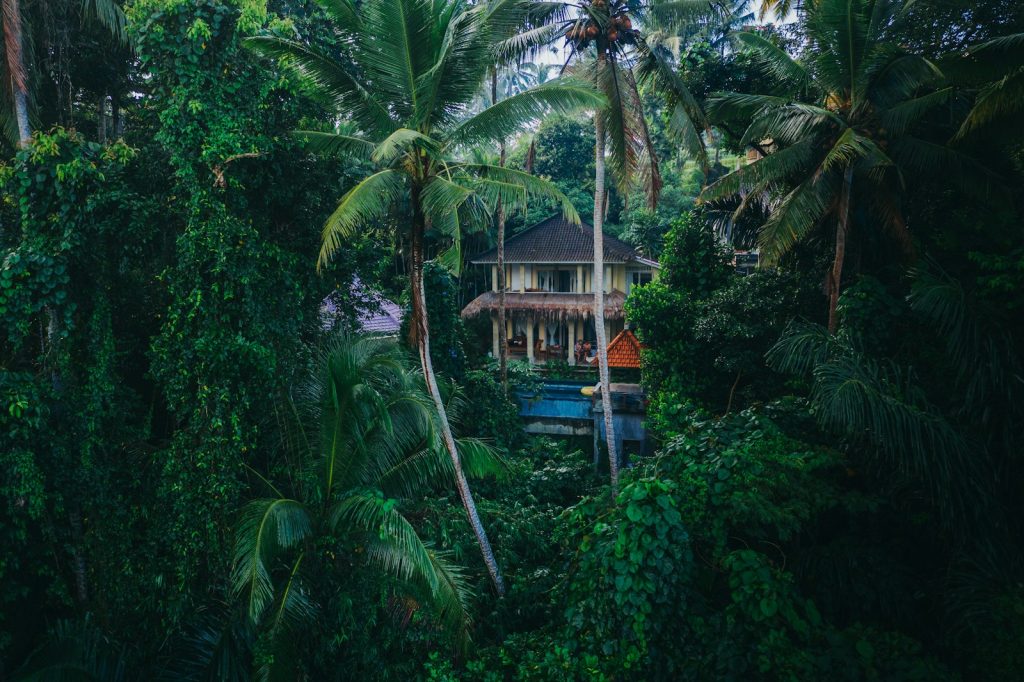
Moving to ubud means relocating to a small Balinese town centred on temples, rice fields and wellness studios instead of beaches and beach clubs. For many expats it’s the place in Indonesia where daily life feels most like a village while still offering good cafes, co‑working spaces and a tight international community.
Last verified: June 2026. Rules, prices and visa policies change frequently — always double‑check with licensed professionals before you commit.
Ubud sits in the hills about 1–1.5 hours from Bali’s airport in Denpasar (traffic dependent). It’s cooler and greener than the coast, with more rain and more roosters. This guide is an honest, practical Ubud expat guide covering housing, visas, healthcare, money, schools and how daily life really works once the yoga retreat ends.
—
## Is living in Ubud actually for you?
Ubud is great if you:
– Prefer rice fields, jungle and temples to bars and beach clubs
– Work remotely or are retired / financially independent
– Value wellness, yoga, organic food, community events
– Can handle scooters, uneven sidewalks and frequent ceremonies that close roads
Ubud is harder if you:
– Must commute daily to Kuta/Canggu or Denpasar
– Need international‑standard healthcare on your doorstep (you’ll go to Denpasar for bigger issues)
– Want quiet at night in the centre (scooters + dogs + ceremonies = noise)
– Expect Western‑style urban infrastructure
If you like the idea of walking to your favourite warung and saying hi to the same neighbours every day, living in Ubud can be rewarding. Just arrive prepared for humidity, ants, and ceremonies that matter more than your meeting.
—
## Where to live in Ubud: neighbourhoods explained
There are no hard borders, but expats tend to cluster in a few zones.
### Central Ubud (Monkey Forest – Hanoman – Dewi Sita – Jl Raya Ubud)
– Walkable to cafes, yoga, co‑working and the market
– More noise, traffic, tour buses by day
– A mix of homestays, small villas and guesthouses
Good if you want to live car‑free and don’t mind bustle.
### Penestanan & Sayan (west of centre)
– Long‑time expat pocket with rice field paths and art studios
– Mix of older houses, new villas and shared rentals
– Narrow access roads; many people use scooters or walk in from parking areas
Feels more “village”, but some parts are now busy with cafes and yoga studios too.
### Nyuh Kuning (south of Monkey Forest)
– Quiet village with tree‑lined streets and family compounds
– Easy access to Monkey Forest and central Ubud on foot or scooter
– Popular with families and longer‑term residents
More organised layout and less through‑traffic than most areas.
### Mas, Lodtunduh, Singakerta (south of Ubud)
– More space, newer villa developments, and slightly better car access
– Still close enough for a 10–20 minute scooter ride into town
– Rice fields increasingly converted into accommodation
Good compromise if you work from home and want more house for your money.
### Tegallalang & “Ubud north”
– Cooler, more rural, more quiet
– Longer scooter rides to town, especially at night or in rain
– Increasing number of retreat centres and remote villas
Ideal if you want more nature and don’t need daily trips into the centre.
—
## Housing: rents, contracts and reality
Most foreigners in Ubud rent; some buy leasehold or use corporate structures, but very few safely own freehold land. Anything involving a “local friend” holding land for you (nominee schemes) is high‑risk and strongly discouraged.
### Typical 2025–2026 rent ranges (last verified June 2026)
These are ballpark ranges; location, access, view and design drive big differences.
| Type | Monthly (short/medium term) | Annual (paid up front) |
|---|---|---|
| Basic room in homestay (fan/AC) | IDR 4–8 million | IDR 36–70 million |
| Simple 1‑bed house/shared kitchen | IDR 6–12 million | IDR 60–120 million |
| 1‑bed private villa with pool | IDR 10–22 million | IDR 110–230 million |
| 2‑bed family villa with pool | IDR 15–30 million | IDR 160–320 million |
| 3–4 bed villa, good access/view | IDR 25–50+ million | IDR 280–600+ million |
Short‑term monthly prices are usually higher than annual rates pro‑rated, but still negotiable in low seasons.
### How Ubud rentals usually work
– **Payment:** Annual or multi‑year rent is often paid 100% up front by bank transfer. Monthly is more common for homestays and coliving.
– **Utilities:** Clarify what is included: electricity, internet, pool, garden, banjar fees. Some “all‑inclusive” places cap electricity and charge extra if you use AC heavily.
– **Contracts:** Many are bilingual Indonesian/English, but Indonesian (Bahasa Indonesia) is usually the binding language.
– **Banjar fees:** Local community (banjar) may expect a contribution for trash collection, ceremonies, and security. This can be IDR 50,000–300,000 per month or included in rent.
Always ask:
– Who is responsible for repairs and how fast they usually respond
– Well vs PDAM (mains) water and water quality
– Access: can a car reach the door, or do you walk 200 m on a narrow gang?
If you want help evaluating contracts or landlords, you can plan your trip with us — we can put you in touch over WhatsApp with licensed agents and legal professionals who know Ubud.
—
## Property ownership: clear warning on nominee setups
Indonesian freehold land (SHM) is reserved for Indonesian citizens. As a foreigner you have a few lawful options:
– **Hak Pakai (right of use)** over a building or land in your own name (requires certain visa/residence status and minimum property values that shift by region).
– **Hak Guna Bangunan (right to build)** via an Indonesian company (PT PMA) with proper licensing.
– **Leasehold contracts** (long rentals, e.g. 25–30 years, sometimes with extension options).
What you should avoid:
– Any offer where land is bought in an Indonesian individual’s name “for you”, often a friend, driver or staff member (nominee arrangement). These are legally fragile: you do not own the land, and disputes can be hard to win.
– Cash payments without official receipts, or contracts that your own independent lawyer has not reviewed.
If you are serious about acquiring long‑term rights in Ubud, budget for independent legal advice from a licensed notary/land lawyer. Nothing in this article is legal advice.
—
## Visas for living in Ubud (2025–2026 snapshot)
Rules and fees change regularly and can vary by nationality and consulate. Always verify with a licensed visa consultant or directly with Kantor Imigrasi.
Here is a simplified comparison (ranges last verified June 2026):
| Purpose | Common visas | Typical stay pattern | Indicative official fee range* |
|---|---|---|---|
| Short stay, tourism | Visa on Arrival (VoA) or e‑VoA for eligible nationalities | Initial 30 days + 30‑day extension (max ~60 days) | Approx. IDR 500,000–600,000 per issuance/extension |
| Longer stay, not working in Indonesia | Visit visas (single/multiple entry), some “digital nomad‑style” schemes | 60–180 days, sometimes extendable or multiple entry | Low to mid USD hundreds per period |
| Living long‑term (retirement) | Retirement‑type KITAS (age/income/insurance conditions apply) | 1 year, renewable; eventual KITAP possible | Low four‑figure USD per year including permits and processing |
| Working, investing, managing a business | Work KITAS through employer or Investor KITAS via PT PMA | 1–2 years, renewable | From high hundreds to a few thousand USD per year plus company costs |
*These are broad ranges for government fees and typical total outlay. Service fees charged by agents/consultants vary widely.
Important principles:
– Do not work in Indonesia (even online for foreign clients) if your visa or residence status does not allow it; regulators are paying more attention.
– Avoid “visa runs” (repeated border runs to reset short‑stay visas) as a long‑term strategy; policy can shift without warning and entry is never guaranteed.
– Some “digital nomad” labels used in marketing describe existing visit visas, not a special class like in some other countries.
For personalised options, speak with a licensed consultant. We can help you plan your trip and connect you via WhatsApp to vetted professionals; no one can pay to change what we publish; if you proceed with our partner they may pay us a referral fee at no extra cost to you.
—
## Cost of living in Ubud: 2025–2026 ranges
Ubud can be affordable or quite expensive depending on housing and lifestyle. Below is a rough monthly budget for one person, living modestly but comfortably, last verified June 2026:
- Rent (simple 1‑bed, long‑term)
- IDR 6–12 million
- Electricity & gas
- IDR 500,000–1.5 million (heavy AC use = more)
- Internet (home fibre)
- IDR 300,000–800,000
- Local SIM & data
- IDR 100,000–300,000
- Groceries (mix local/imported)
- IDR 3–6 million
- Eating out (local + cafes)
- IDR 3–8 million
- Scooter rental + fuel
- IDR 1–2.5 million (rental ranges by model and term)
- Co‑working / gyms / yoga
- IDR 1–4 million (depending on how many classes/passes)
- Health insurance (international plan)
- USD 80–350+ per month by age/coverage
- School fees (if applicable)
- Can range from low to high USD four‑figures per term; very school‑specific
Solo digital nomad living fairly simply: IDR 15–25 million per month plus insurance.
Family with 1–2 kids in international school and a private pool villa: IDR 45–100+ million per month.
—
## Healthcare, wellness and insurance in Ubud
### Healthcare
Ubud has clinics, dental practices and small hospitals suitable for:
– Minor injuries and common illnesses
– Routine blood tests
– Check‑ups and some dental work
For:
– Emergency care (serious accidents, heart issues, stroke)
– Surgery
– Complex diagnostics
…you will likely go to larger hospitals in Denpasar or even Jakarta or Singapore, depending on what your insurer authorises and your condition.
Ambulance response time can be slower than in Western cities and addresses are often described by landmarks, not numbers. Keep:
– Location pins for the nearest reputable clinic and hospital
– Emergency contact numbers saved and printed
– Your insurance card and passport copy handy
### Wellness scene
Ubud is famous for:
– Yoga, breathwork, meditation, sound healing and other modalities
– Retreat centres, day passes, and workshops
– Organic cafes, vegetarian and vegan restaurants
– Balinese healing traditions and temple ceremonies
Costs vary:
– Drop‑in yoga class: often IDR 130,000–200,000+
– Monthly passes: high hundreds of thousands to a few million rupiah
– Spa treatments: from IDR 150,000 at simple places to several hundred thousand at resort spas
Wellness here is big business. Research teachers and centres, be cautious around health claims, and remember that traditional healers operate within cultural and spiritual contexts that deserve respect.
### Insurance
If you plan on living in Ubud for more than a few weeks:
– Strongly consider an international health insurance policy that covers private care in Indonesia and evacuation.
– Some long‑stay visas, including retirement‑type and work permits, require proof of insurance.
Compare:
– Coverage in Indonesia, Singapore, and your home country
– Pre‑existing condition rules
– Direct billing arrangements with Bali hospitals
—
## Getting around: scooters, cars and driving licences
### Scooters
Scooters are the default way to get around Ubud.
– Daily rentals cost more per day; monthly and annual rentals bring the per‑month number down.
– Helmets are legally required.
– Roads can be narrow, steep and slippery in rain. Dogs and chickens wander into traffic.
If you are not comfortable on two wheels, Ubud may feel limiting unless you budget for frequent rideshares and taxis.
### Cars and taxis
– You can rent a car with or without a driver; with a driver is common for day trips.
– Taxis, online ride‑hailing cars and bike services run in and around Ubud, though some areas have restrictions due to local transport cooperatives.
### Licences and fines
To ride legally you need:
– A valid driving licence from your home country, and
– An International Driving Permit (IDP) that specifically covers motorcycles, unless you have an Indonesian SIM C (for motorcycles) or SIM A (for cars).
Police stops are common on certain roads. Fines can be issued on the spot through official channels; avoid unofficial payments where possible and ask for receipts.
—
## Schools and family life
Ubud has a small but growing number of:
– International or alternative schools (Montessori, Waldorf‑influenced, project‑based)
– Homeschooling and unschooling communities
– Short‑term programmes for families on sabbatical
Fees, accreditation and teaching quality vary widely. For serious long‑term moves:
– Visit schools in person and sit in on classes if allowed
– Ask about accreditation, exam paths and graduate outcomes
– Check visa requirements for your children’s stay
Family life in Ubud can be rich:
– Safe for kids to walk around the village with supervision
– Daily exposure to Balinese culture, dance, music and rituals
– Space for nature, from rice fields to waterfalls and rivers (with care)
But keep in mind:
– Healthcare access is less immediate than in major cities
– Some houses have open pools and steep stairs without childproofing
– Air quality can drop during regional burning seasons, though usually less than some major Indonesian cities
—
## Banjar, ceremonies and daily life realities
Every area is part of a banjar — the local community organisation that handles ceremonies, security, trash, and a lot of dispute resolution.
As a foreigner you are not a voting member, but you are a neighbour. Life in Ubud is smoother if you:
– Don’t block access roads or temple paths with parked vehicles
– Respect noise limits around temple days and ceremonies
– Dress modestly around temples and during major festivals
– Contribute when asked fairly for community or temple funds (discuss with your landlord how they handle this)
Daily life “frictions” many new arrivals notice:
– **Noise:** roosters, dogs, gamelan rehearsals, temple loudspeakers, and traffic. Earplugs help.
– **Nature:** ants, frogs, geckos, mould in rainy season. A dehumidifier and regular cleaning are your friends.
– **Power and internet:** outages do happen. If work is critical, choose a home on a more stable grid and scout backup co‑working spaces.
– **Weather:** dry and wet seasons can both be intense in different ways — heat vs humidity and rain.
—
## Money, tax and working remotely
### Banking and payments
– ATMs are widely available. Many charge withdrawal fees; your home bank may also charge.
– Card payments are common in cafes, supermarkets and many businesses, but cash is still useful in markets and small warungs.
– It is possible for foreigners with the right documents to open Indonesian bank accounts; requirements vary by bank and visa type.
### Tax residency
Indonesia considers you tax resident if you:
– Stay in Indonesia for more than 183 days in any 12‑month period, or
– Are present and intend to live in Indonesia.
Tax rules have been evolving, including how foreign‑sourced income and high‑net‑worth individuals are treated. There is also a territorial‑style regime available for some newcomers under certain conditions.
Important:
– Many “digital nomads” assume they owe zero Indonesian tax. That can be wrong if you become tax resident.
– Double taxation agreements may help, but you need proper advice.
– Cryptocurrency, investment income and business income can all be treated differently.
Nothing here is tax advice. Speak to a licensed Indonesian tax consultant before you cross 183 days or restructure your work. We can help you plan your trip and connect over WhatsApp with professionals who understand expat situations.
—
## How to test Ubud before committing
Before signing a year‑long lease or moving your whole life:
1. **Stay a month or two in different areas** — perhaps one month in central Ubud and one in Penestanan or Mas.
2. **Try wet season and dry season** if possible. They feel quite different.
3. **Practice your real routine:** work hours, yoga, school runs, grocery shopping, dealing with laundry, late‑night pharmacy runs.
4. **Talk to long‑term residents:** different perspectives from people who stayed more than two or three years.
5. **Visit Kantor Imigrasi and a local tax consultant:** understand the practical side of living legally, not just the marketing.
—
## Ready to start planning a move to Ubud?
If moving to Ubud is starting to feel realistic, map your next steps:
– Decide your initial visa with a licensed consultant
– Set a realistic budget using the ranges above
– Shortlist neighbourhoods that match your lifestyle
– Arrange a scouting trip with a temporary place first, then hunt for a longer‑term rental on the ground
– Line up health insurance and an emergency plan
We specialise in honest, no‑nonsense relocation help for Indonesia. You can plan your trip with us, and we can coordinate via WhatsApp to connect you with trusted visa agents, tax advisors and housing help. No one can pay to change what we publish; if you proceed with our partner they may pay us a referral fee at no extra cost to you.
—
Is Ubud safe for expats?
Ubud is generally considered safe, with lower violent crime than many big cities. The main issues foreigners encounter are scooter accidents, petty theft (bags/phones), and the occasional villa break‑in. Use normal urban precautions, lock doors, wear a helmet, and avoid driving drunk or late at night in heavy rain.
Can I live in Ubud long‑term on a tourist visa?
Tourist‑type visas (including VoA) are designed for short stays. Some people chain visit visas or do frequent border runs, but entry is never guaranteed and policies change quickly. If you want to live in Ubud long‑term, speak to a licensed consultant about retirement, investment, work or other longer‑stay options that fit your situation.
Do I need to speak Indonesian to live in Ubud?
You can survive with English in many parts of Ubud, especially in cafes, co‑working spaces and expat‑oriented businesses. Life becomes much easier and more rewarding if you learn basic Bahasa Indonesia for everyday interactions with neighbours, landlords, market sellers and local officials.
How much money do I need to live comfortably in Ubud?
A single person can live modestly but comfortably from around IDR 15–25 million per month plus insurance if renting a simple place and not spending heavily on imported goods. Many expats spend more, especially on private villas, international schools, frequent trips and wellness activities. Families should budget from IDR 45 million per month upwards depending on school choice and housing.
Can I bring my pets to Ubud?
Bringing pets into Indonesia involves import permits, health certificates, and vaccination requirements that vary by origin country and current regulations. Bali has additional controls because of past rabies concerns. Work only with experienced, licensed pet relocation specialists and build in months of lead time. Quarantine or routing via other Indonesian cities may be required; rules can change.